

Learn simple and practical time management techniques to organize your day, prioritize important tasks, avoid distractions, and get more done without feeling overwhelmed.
Why Is Time Management Important?
Good time management helps you control your day instead of allowing your day to control you. When you know what you need to do and when you need to do it, it becomes easier to focus on important work.
Learning how to manage time can help you:
*Complete important tasks on time
*Reduce stress
*Improve concentration
*Avoid procrastination
*Create a better daily routine
*Make time for personal activities
*Stay focused on your goals
*Maintain a better work-life balance
The goal isn’t to control every second of your day. The goal is to make better decisions about where your time and attention go.
1. Start Your Day With a Simple Plan
One of the easiest time management tips is to start your day with a simple plan.
Before beginning your work or study session, write down the tasks you want to complete.
Don’t create a list of twenty things. Start with your three most important tasks.
*For example:
Complete an important assignment
Study for two hours
Exercise for 30 minutes
Once you’ve identified your priorities, decide when you are going to work on them.
A simple plan gives your day direction. Instead of constantly asking yourself what to do next, you already have a clear starting point.

2. Learn How to Prioritize Tasks
Not every task has the same level of importance.
Learning how to prioritize tasks is one of the most useful time management techniques you can develop.
Before starting your day, ask yourself:
“What is the most important thing I need to complete today?
”Put that task near the top of your list.
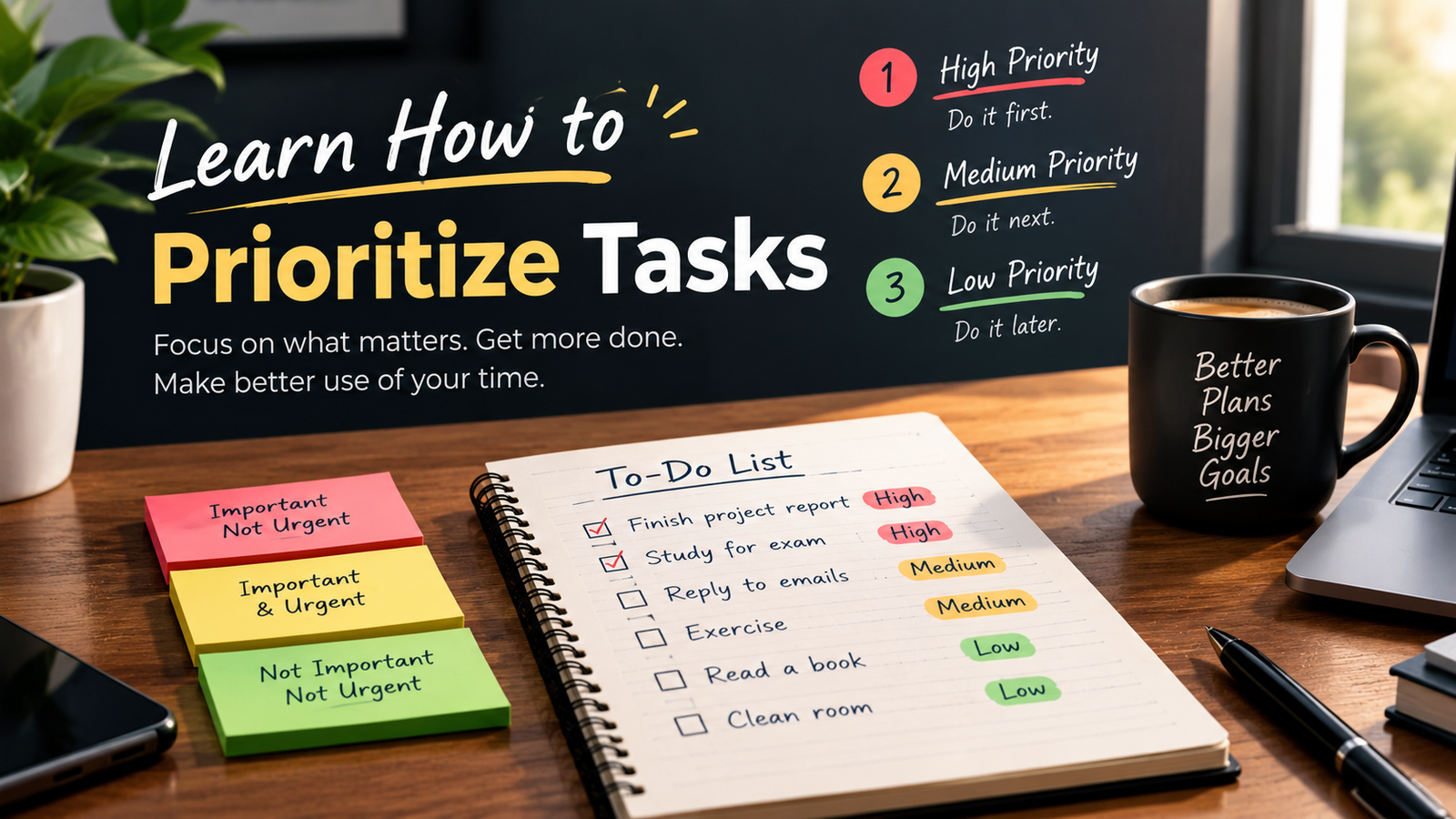
You can divide your tasks into three simple categories:
*High Priority
Tasks that are important and need your attention soon.
*Medium Priority
Tasks that are useful but don’t need immediate attention.
*Low Priority
Tasks that can be completed later or removed if they are unnecessary.This method helps you spend your best hours on activities that actually matter.
3.Create a Realistic Daily Schedule
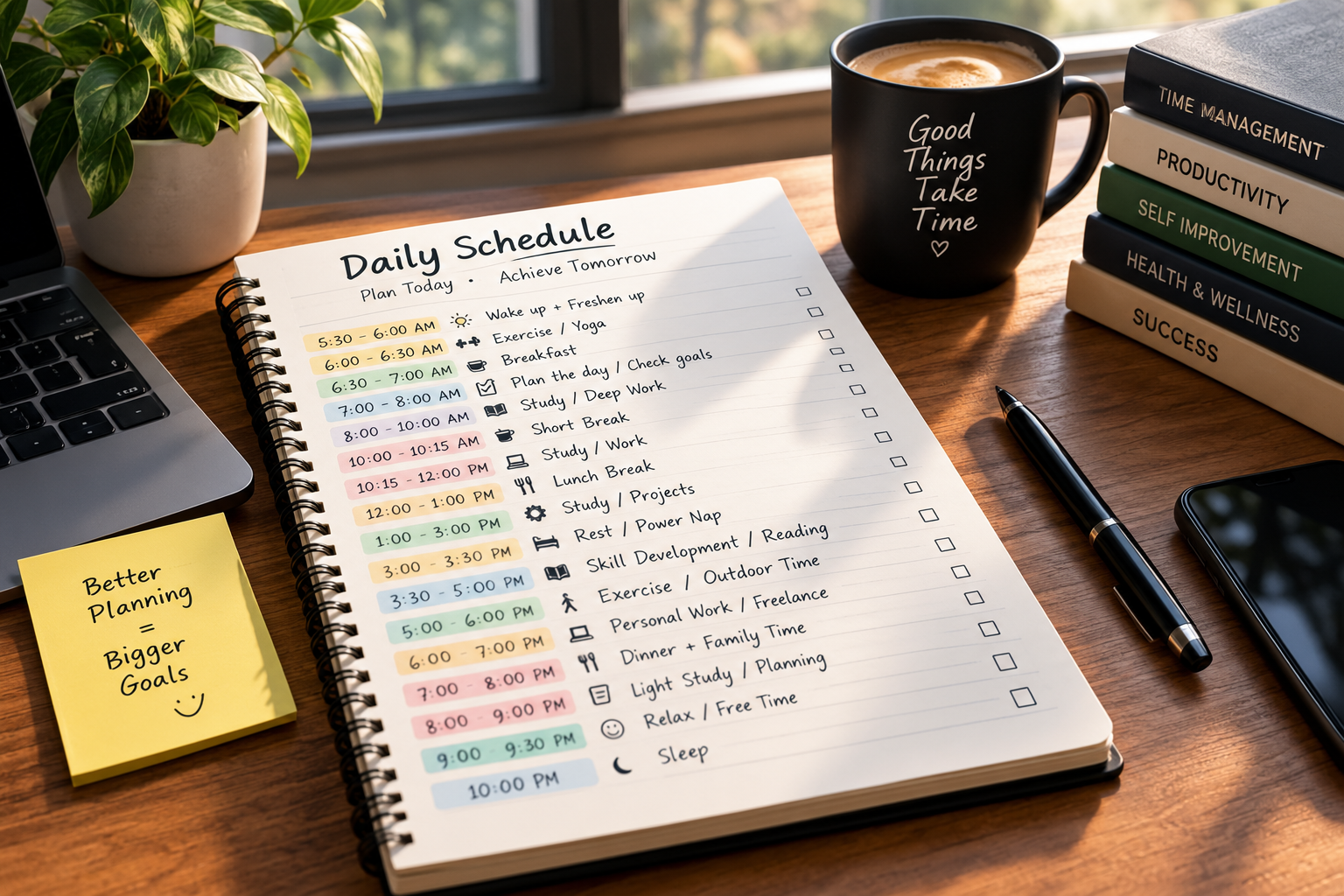
A daily schedule can make it easier to organize your time.
Your schedule doesn’t need to be complicated.
*For example:
7:00 AM – 8:00 AM: Morning routine
9:00 AM – 11:00 AM: Important work or study
11:00 AM – 11:30 AM: Break
12:00 PM – 1:00 PM: Smaller tasks
4:00 PM – 5:00 PM: Exercise
7:00 PM – 8:00 PM: Learning or personal development
The exact timings don’t matter as much as having a clear structure.
Also, don’t fill every minute of your schedule.
Leave some free time for unexpected work, delays, and rest.
A realistic schedule is much easier to follow than a perfect schedule that becomes impossible to maintain.
4. Avoid Distractions
Distractions can quietly consume a large part of your day.
Your phone, social media, notifications, videos, games, and unnecessary conversations can interrupt your concentration.
You may plan to check your phone for five minutes, but that five minutes can easily become thirty minutes.
If you want to avoid distractions, try these simple strategies:
Turn off unnecessary notifications.
Keep your phone away while working.
Use focus mode when studying.
Close unnecessary browser tabs.
Decide specific times to check social media.
Work in a quiet environment.
Keep only the tools you need in front of you.
You don’t have to completely remove technology from your life.
Instead, create boundaries so that you control your attention rather than your distractions controlling you.

5. Stop Multitasking
Many people believe multitasking makes them more productive.
In reality, constantly switching between tasks can reduce concentration and make simple work take longer. Imagine studying while simultaneously replying to messages, watching videos, and listening to random content. Your attention keeps moving from one activity to another.
You may spend two hours at your desk but accomplish less than someone who worked with full concentration for one hour. Instead of multitasking, try single-tasking. Choose one important activity and give it your complete attention for a fixed period.
Once you finish it, move to the next task. This approach can make your work faster, cleaner, and less stressful. When you train your brain to focus on one thing at a time, you also improve your ability to concentrate.

6.Learn to Say No
Your time is limited.
If you say yes to every request, invitation, activity, and interruption, you may not have enough time for your own priorities.
Before accepting something, ask yourself:
“Does this activity help me with something important right now?
”If it doesn’t, consider saying no politely
Learning to say no doesn’t mean being rude.
It means understanding the value of your time.
Sometimes protecting your schedule is just as important as creating it.
7.Don’t Wait for Motivation
Motivation can be helpful, but it isn’t always reliable.
Some days you’ll feel energetic and ready to work.
Other days, you won’t feel motivated at all.
That’s why a simple routine is often more useful than waiting for motivation.
Instead of asking:
“Do I feel motivated today?
”Ask:
“What is the next small step I can take?
”Then take that step.
Consistency is built by taking action even when you don’t feel perfectly motivated.

8.Take regular breaks
Good time management doesn’t mean working continuously.
Your brain needs time to recover.
After a focused period of work, take a short break.
You can:
Drink water
Walk around
Stretch
Take a few deep breaths
Rest your eyes
Get some fresh air
Try not to turn every break into a social media session.
A five-minute break can become an hour of scrolling if you aren’t careful.
The purpose of a break is to refresh your mind so you can return to your work with better focus.

9.Review your day
At the end of the day, spend a few minutes reviewing how you used your time.
Ask yourself three simple questions:
*What did I accomplish today?
*What wasted my time?
*What should I do differently tomorrow?
Do not use this exercise to criticize yourself.
Use it to learn. Maybe you discovered that you spend too much time on your phone in the morning. Maybe you realized that you work better in the evening. Maybe you planned too many tasks and could not complete them. These observations can help you improve your schedule. Effective time management is not something you master in one day. It is a skill that improves through practice and self-awareness.

10. Remember: Consistency Is More Important Than Perfection
Finally, do not expect yourself to follow a perfect schedule every single day. Life is unpredictable. Sometimes emergencies happen, plans change, or you simply have a bad day. The goal of time management is not perfection. The goal is progress. If you waste three hours today, do not decide that the entire day is ruined. Start again with the next hour. If you miss your morning routine, continue with your afternoon plan. Small improvements repeated every day can create major changes over time. Managing your time effectively means making conscious choices about how you spend your limited hours. You do not need to become extremely busy. You simply need to become more intentional.
Final Thoughts
Time management is ultimately about managing your priorities, attention, and habits. Start with a simple daily plan, focus on important tasks, reduce distractions, avoid unnecessary multitasking, take regular breaks, maintain your health, and review your progress. You do not need a complicated system. Even a few small changes can make a significant difference in your productivity and confidence. Remember, everyone receives the same 24 hours, but how you use those hours can shape your future. Start today—not tomorrow, not next Monday, and not when you feel perfectly motivated. Choose one important task, give it your full attention, and take the first step.